Whole Life Clarity From One AI Prompt?

Sometimes there’s a door in the wall that’s blocking you. Look again. But this door is clearly in some weird museum you’d WANT to get out of! So pay this weird image no attention.
“I know I do things differently, but I don’t know how to describe it.”
I had a problem. Twenty years of keynote speeches, hundreds of workshops, thousands of articles—all of it scattered across websites, Google Docs and hard drives and too much to hold in my head at one time.
Somewhere in all that content, I wondered if there was a pattern or a system. Something that made my work different.
I hoped so… but I couldn’t see it.
So I did what any reasonable person would do in 2025. 😃 I fed everything I’d said and wrote this year to Claude and asked it, “Tell me what patterns you see.”
What came back surprised me. Not because I was doing anything wrong. But because I’d actually had a system my entire career but just didn’t have clarity about what it was.
The AI started pointing things out. “You talk about identity a lot. Going from smoker to non-smoker. From outsider to participant. Reactive to intentional.”
Yeah, I knew that. Identity is destiny, right? I mean, I’d been teaching that forever.
**Who you **think you are shapes what *you do.*****Your self-image can be empowering, but it can also be limiting.
When I was 18 and started college, I hung out with people who smoked. So naturally, I started smoking too. Did it for a couple years. Then I decided I needed to quit—this wasn’t healthy, right? So I read all this stuff, listened to these tapes. (Yeah, it was the nineties. We still had tapes.)
One thing stuck with me: smoking is a covert form of suicide. Like, every time you light up, part of you doesn’t really want to be alive. You’re checked out from life at some level, you know?
That was a tough realization. I didn’t want to kill myself… I wanted to live.
So I changed my perspective. I wasn’t “a smoker trying to quit.” I was a non-smoker. A healthy person. Someone committed to being the best version of myself.
That was what I needed. I threw out the ashtrays. Stopped hanging around smokers.
“In your keynotes and workshops, you start with the surface problem,” Claude continued, “then you go to what’s underneath. You meet people where they are—they think the problem is one thing—and then you take them deeper. Have them think about what’s really going on.”
It took me a lotta journaling and meditation over many years to see how the deeper level is always truer, where real change happens.
I hated corporations, I thought, but I actually just hated being powerless.
“There’s a moment. You call it different things in different talks, but it’s always there: the instant where your perspective flips.”
Right. With smoking…
Surface problem: I need to quit smoking.
Deeper pattern: I think of myself as a smoker. I’m not committed to life and health.
The flip: I need to view myself as a non-smoker, a healthy person, and commit to that.
That’s the one second where the identity shifts.
“After that shift, you build a system to make it permanent. Then you measure it and validate it worked.”
“It’s not just how you teach. It’s a framework. Five steps. You’ve been using it for 20 years. You just never named it.”
This was literally an “OH CRAPPAFUGGLE” moment.
I spend a lot of time using AI… and it’s often tedious or frustrating, but this level of contribution to my life was major. I’m getting choked up thinking about it how big a deal this is.
It’s unlocked a lot of energy for me and I’m now building the kind of thing that as an expert and author I’ve always wanted to have, and have been jealous that other people had.
So, yeah, AI can do more than write emails for you.
Subscribe now
I went back through my transcripts.

The play director story—you know, the woman who runs kids’ theater and figured out how to double her revenue without changing her business? She went thru that process. Started with what she thought she needed (something new), showed her what was really happening (she wasn’t seeing what she already had), saw it differently (what if you looked again at what you’ve got?), then she built the system (two casts, parent plays), and it worked (more revenue, fuller calendar).
Five steps.
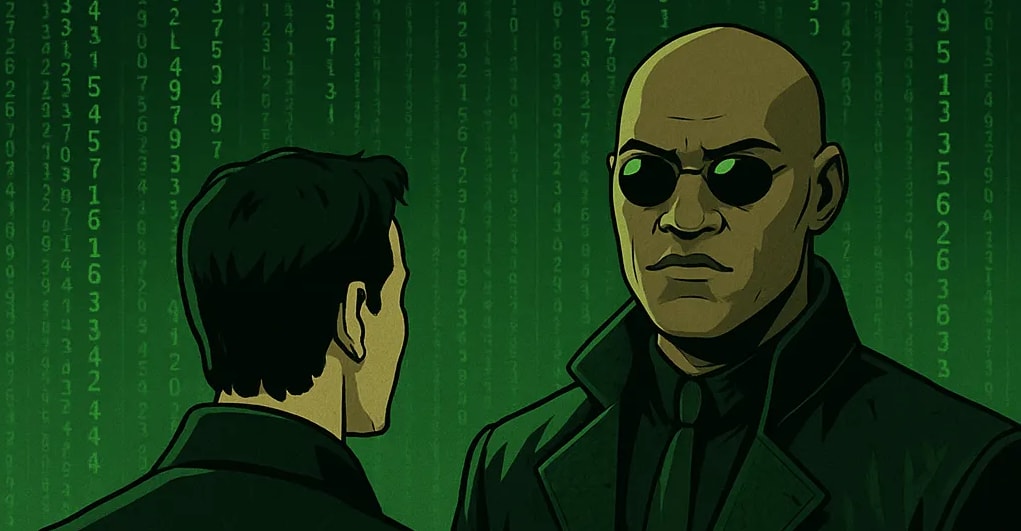
My Matrix article about Agent Smiths and our limiting beliefs, and how I became a keynote speaker? Same structure. Your limiting belief is the surface problem. The deeper pattern is that Agent Smiths aren’t real—they’re code, beliefs, not truth. The flip happens when you see through them. Then you build new systems. Then you validate it worked by measuring what changed.
Five steps.
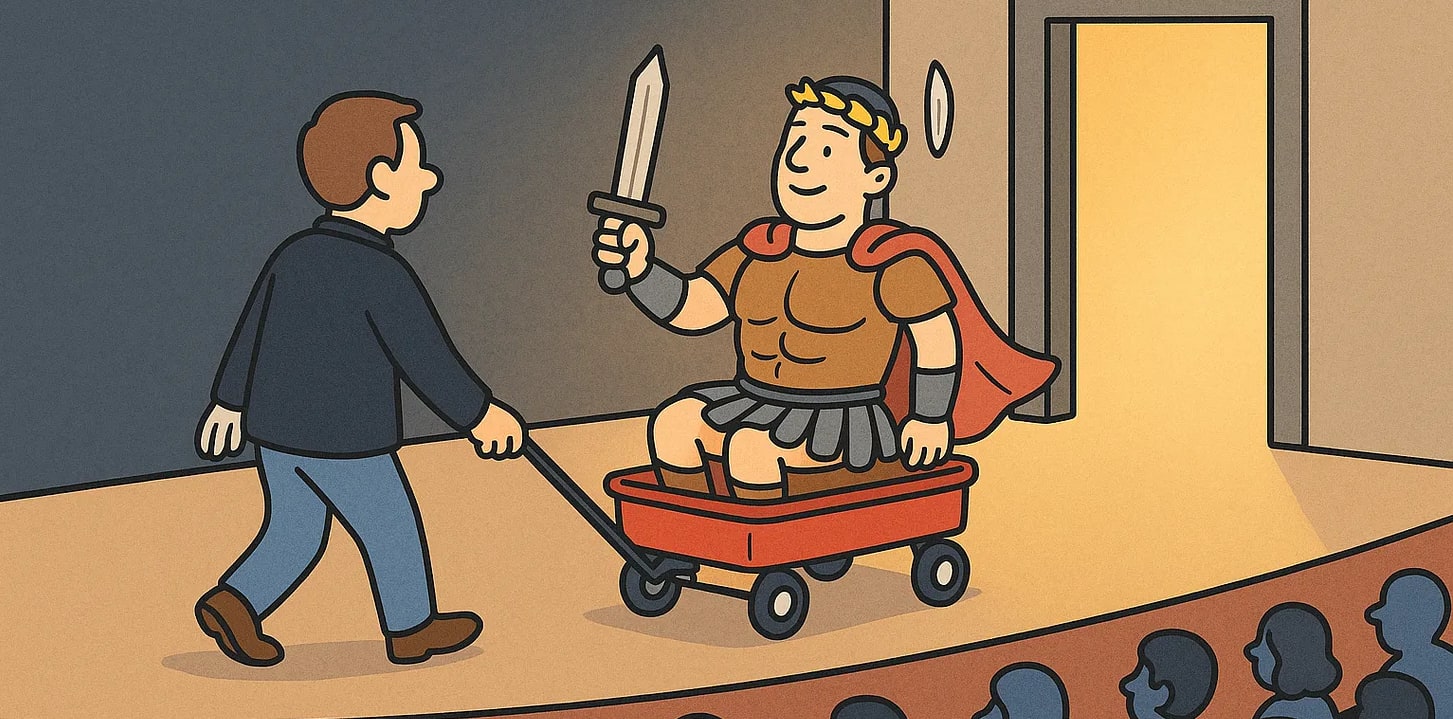
That article about being in a musical when I’d never acted before? Started with “I can’t do musicals, that’s not for me.” Then realized the deeper pattern—I was excluding myself, not being excluded. The flip: what if I learned? Built the system: took voice lessons, let people teach me, practiced even when I sucked. Validated: got the “How Hard Can It Be?” award, now I’m thinking about doing another one.
DID I SAY “Five steps”?
Even the stories I tell about meeting my wife Lynda, or getting into keynote speaking with Garrison. All of them. Same structure.
Problem. Plunge. New Picture. Path. Progress.
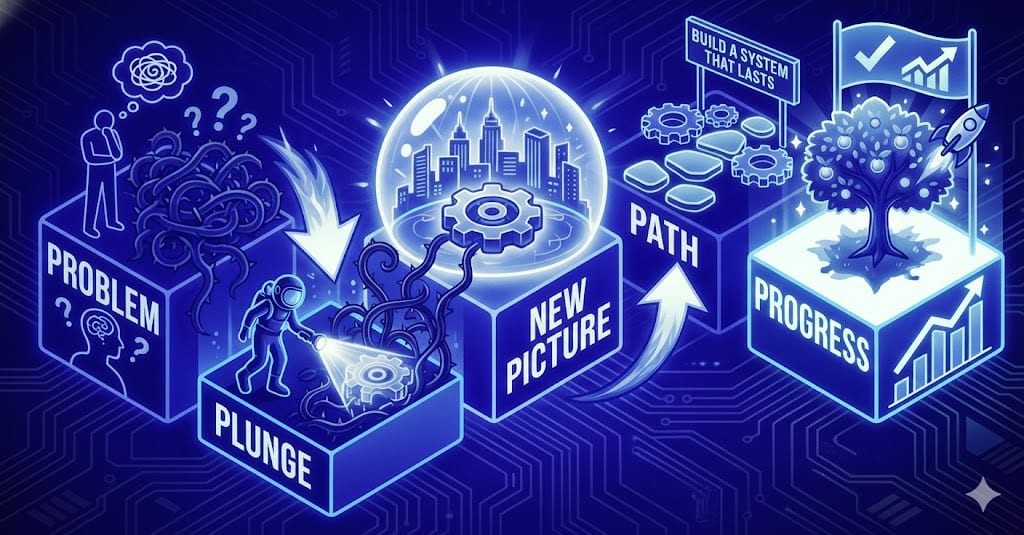
I couldn’t see my own pattern. And I’m the guy who helps leaders see what they’re missing.
Here’s what gets me about this.
I spend my whole career showing people the blind spots they can’t see themselves, right? The wall they think is a wall but it’s actually a door. The problem they think they have that’s really a different problem underneath. The solution that’s right in front of them but invisible because they’re too close.
And I had the same blind spot.
I needed something outside my own head—in this case, AI processing thousands of pages of content—to show me what I’d been doing all along. The framework was always there. In every keynote. Every workshop. Every coaching session. I’d just never named it. Never made it explicit. It was instinct, not system.
Which got me thinking: how many other people are doing the same thing?
You’ve got years of experience. Patterns in your best work. A way you naturally solve problems that’s different from how everyone else does it. But you can’t see it. Can’t name it. Can’t teach it. Can’t scale it beyond just you doing it intuitively.
Because you’re too close.
Share
So here’s what I learned about finding patterns you can’t see.
First, you need to gather your best work. Not everything you’ve ever done—your BEST work. The things people respond to. The stories you keep telling because they land. The advice you give over and over because it actually helps.
For me, that was keynote transcripts, workshop recordings, articles that got shared. The stuff where people said “That changed how I think about this” or “I’ve been using what you taught me.” Not the mediocre stuff. Not the experiments that flopped. The hits.
Then you look for what repeats. Not surface stuff—deeper patterns, you know? What questions do you always ask? What order do things happen in? What makes your approach different from how everyone else does it?
I kept talking about identity shifts. Kept starting with surface problems and going deeper. Kept having that moment where perspective flips. Kept building systems after the flip. Kept validating with results.
But here’s the thing: you can’t see it yourself.
That’s the whole point. You need fresh eyes. A mentor who’s been watching you work. A coach who knows your content. An AI that can process your entire body of work and say, “You just did that same thing seventeen times. Did you notice?”
I’d been doing the five-step thing for twenty years. Took an AI analyzing thousands of pages to point it out.
Once you see the pattern, you name it. Give it language. Turn instinct into system. Make it teachable.
Problem. Plunge. New Picture. Path. Progress.
Now it’s explicit. Now I can teach it. Now other people can use it without me walking them through it every time.
And then you test it. You try teaching it to someone else. See if they can use it and get results. Because if it only works when you do it intuitively, it’s not really a framework yet. It’s just you being good at something without knowing why.
After I found this—after Claude showed me the five steps I’d been using forever—everything got easier.
I could explain what I do in five words. Meeting planners would ask “What makes your keynotes different?” Problem. Plunge. New Picture. Path. Progress. I help people find their pivot moment—the New Picture step—where perspective shifts and the wall becomes a door.
Oh. Got it.
I could write articles that taught the framework by demonstrating it. Like this one, actually. You just went through all five steps. Started with my problem (couldn’t see my pattern). Plunged deeper (the AI showed me what I’d been doing). Had the realization (it’s a framework I never named). Now I’m showing you the system (how to find your own path). And you’ll know it worked if you can spot your own pattern after reading this.
Coaching clients started using the language without me prompting them. “I keep getting stuck at the Problem. I react to the surface problem before I plunge underneath.”
“I had the New Picture—the insight—but I never built a Path. That’s why nothing changed.”
“I can see where I need to go but I’m missing the Progress step. How do I know if it’s actually working?”
Workshop attendees could diagnose themselves and each other. “You’re at the Plunge. You’re analyzing but you haven’t found your New Picture yet.”
When other people can name it and use it without you? That’s how you know it’s real.
The irony isn’t lost on me, you know.
I teach people to look again. To see what they’re missing. To find the door in the wall. And I needed someone—or something—to help me look again at my own work.
The pattern spotter needed someone to spot his pattern.
Maybe you need that too.
You might have the same thing I had. Years of experience that’s turned into instinct. A way you naturally solve problems that consistently works. Clients or colleagues who say “I don’t know how you do that” because you can’t quite explain it yourself.
But you can’t name it. Can’t replicate it. Can’t teach it to your team. Can’t build a business around it because it only works when you do it intuitively.
Someone needs to watch you work and say, “You keep doing this thing. Did you know that?”
I couldn’t see mine. Took 20 years and an AI to show me.
But now? Now I can see patterns everywhere. In other people’s work. In how they solve problems. In what makes them different.
That’s what I do now. Not just with frameworks—with anything you’re too close to see.
The wall you keep hitting that’s actually a door.
The problem you’re solving on repeat that has a deeper pattern underneath.
The thing you do differently than everyone else that could be your whole business if you just named it.
The answer that’s been right in front of you the whole time.
I help you look again.
That’s the framework, actually. That’s what all five steps do. They help you look again at what you thought you knew.
Problem: You think it’s this problem.
Plunge: Look again. What’s really happening underneath?
New Picture: Look again at the whole situation. See it differently.
Path: Now that you’ve reframed, how do you solve it? Build a system that lasts.
Progress: Look at the results. Validate it actually worked.
Look again. That’s the whole thing.
So here’s my question for you: What pattern have you been living that you can’t see?
What do people keep coming to you for? What problems do you solve differently than everyone else? What makes your best work your best work?
You probably can’t answer that on your own. You’re too close to it. It feels obvious to you, so you don’t think it’s special. Or it’s so natural you don’t realize you’re doing anything different.
But it’s there. The pattern’s there.
You just need someone to help you look again.
Brian CarterKeynote Speaker | Coach | Morpheus that’s not as cool as Laurence Fishburne
I help leaders turn walls into doors and solve problems once, not ten times.
Ready to find your pattern? Let’s talk.