Why Your Brain Thinks Trading Is Gambling (And How to Fix It)
This is Part 1 of a 4-part series on understanding and overcoming the psychological traps that turn smart traders into gamblers.
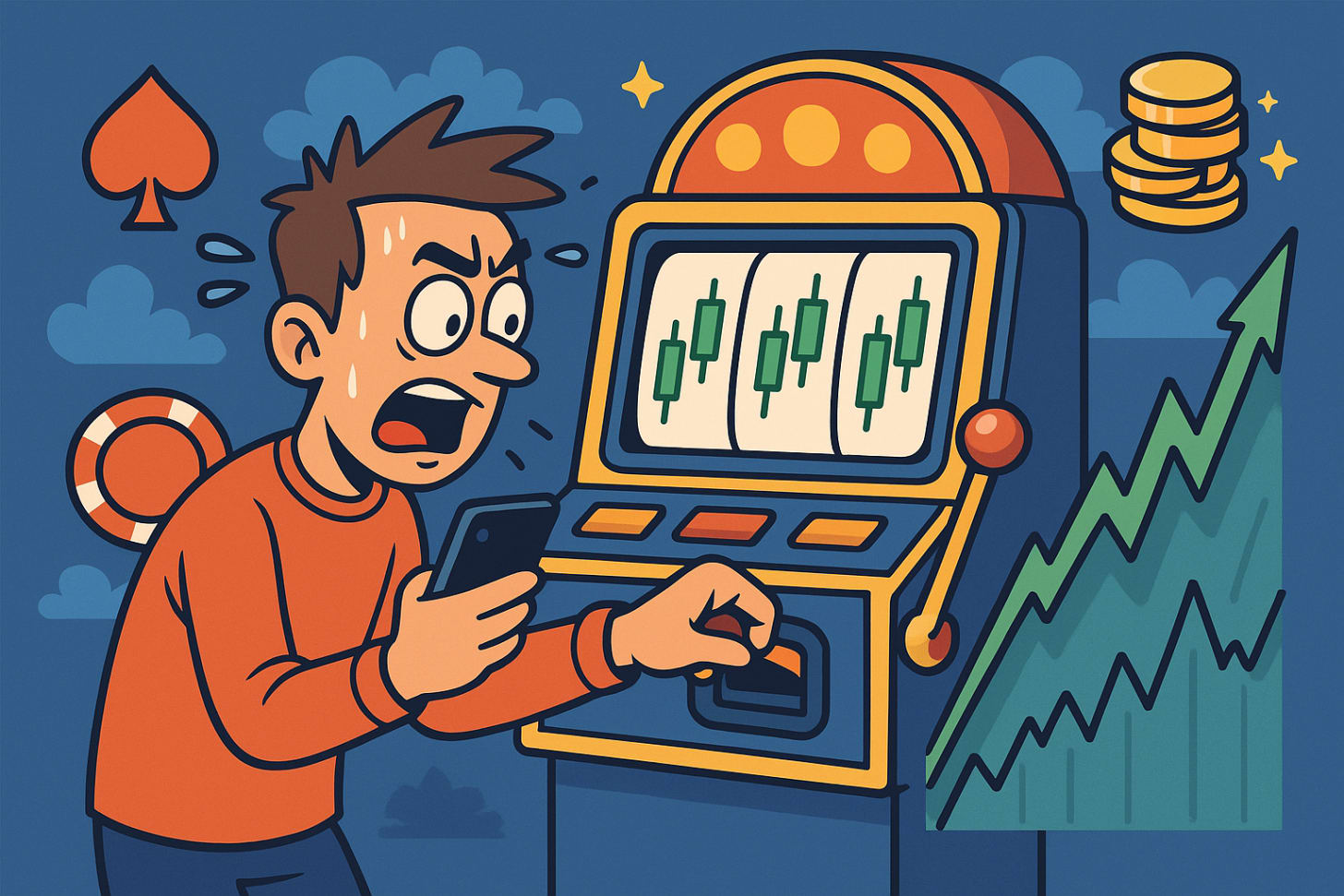
So, in my twenties, a couple buddies and I went from our native Ohio up to Canada, cuz they wanted to go to a casino.
I didn’t really get it but it sounded like it might be fun.
I didn’t have much money back then. (In retrospect, I fit right in!)
So all I gambled that night was $20 on slots.
I remember it vividly- I was up $6 to $26, and thought wow I can use that $6 for the buffet! (Yeah, it was a long time ago)
I was so exhilarated, I kept going. Then I lost some. Then I lost more. Then I was like what the heck and risked the last bit and lost.
Here’s how I know I’m not a gambler. I saw through the whole cycle immediately. “Oh now I get why it’s so addictive.”
And I never did it again. I’ve never spent a single dime in a casino since then.
Number one- I hate losing.
Number two- I hate losing.
Number three, you have no control with slots. No skills, no analysis, no control.
Never did it again.
But that doesn’t mean that the same things that make gamblers make bad decisions don’t affect us all.
So let’s talk about that and how to prevent it.
The Slot Machine in Your Pocket
Imagine walking into a casino where the slot machines are disguised as stock charts.
The flashing lights are replaced with price movements, the spinning reels become candlestick patterns, and the occasional jackpot sounds are the sweet ding of a profitable trade.
This isn’t just a metaphor—it’s what’s actually happening in your brain when you trade.
Scientists have discovered that the same neural pathways that make gambling addictive are firing every time you watch a volatile stock price bounce up and down.
Your brain doesn’t know the difference between pulling a slot machine lever and clicking “buy” on a stock that’s swinging wildly.
Dumb brain!
Subscribe now
Your Brain’s Reward System: A Double-Edged Sword
Think of your brain’s reward system like a loyal dog that gets excited every time it thinks it’s about to get a treat.
Your brain is a dog now. Sorry.
But look at the bright side: your brain is now fluffy, cute, and pees on all your mattresses!
This lassie-like reward system evolved to help our ancestors survive—getting excited about finding food or avoiding danger kept us alive. But in the modern trading world, this same system can work against us.
The key player is a chemical called dopamine, which acts like your brain’s “reward anticipation” alarm. Here’s the twist that surprises most people: dopamine doesn’t fire when you get a reward—it fires when you expect you might get one. It’s like your brain’s way of saying “something good might happen, pay attention!”
Maybe it’s aptly named- dopamine makes you do dopey things!
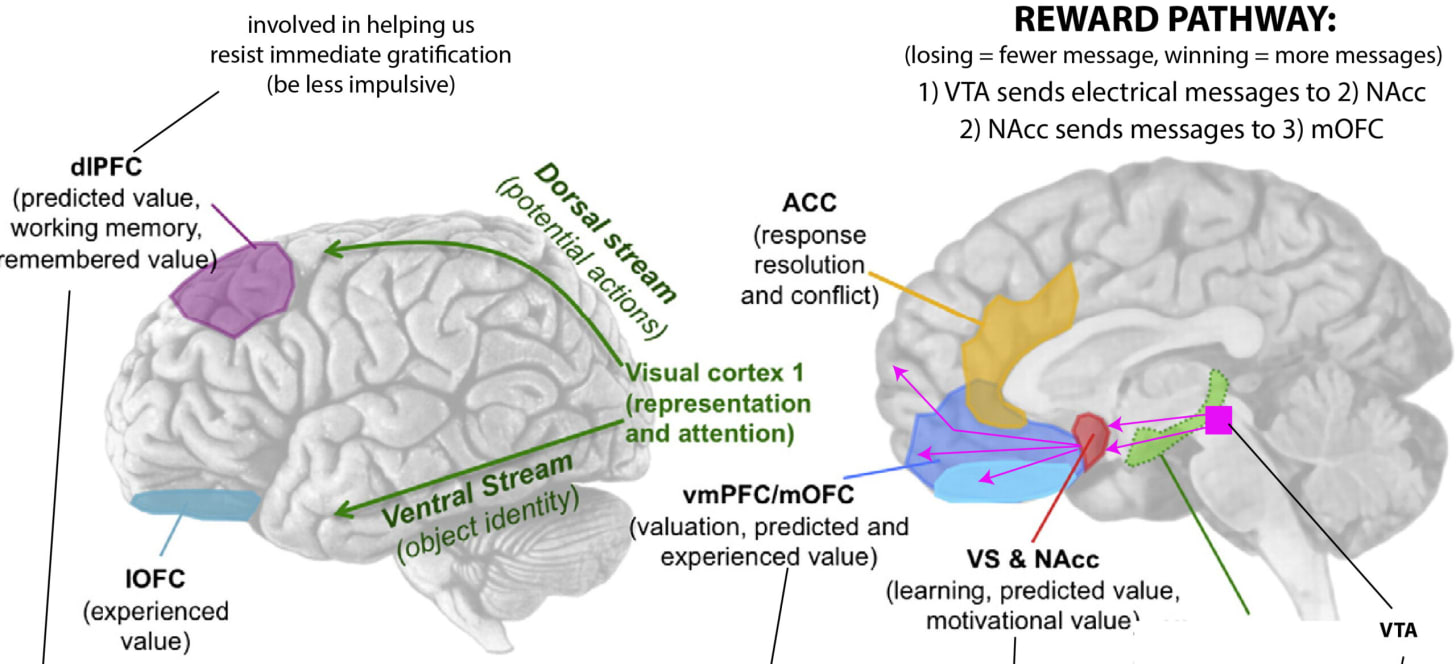
This is why volatile, unpredictable stocks can become psychologically addictive. When a stock bounces around randomly, your brain gets excited about all the possibilities - oh my god, the YACHTS I’m gonna buy! - even if most of them end in losses.
It’s the same reason slot machines use flashing lights and random timing—uncertainty itself becomes rewarding.
The 50% Sweet Spot: Why Your Brain Loves Bad Odds
Research shows that dopamine neurons fire most strongly when your chances of winning are around 50-50. This isn’t coincidence—it’s exactly the reward frequency that commercial slot machines use (46% to be precise).
Your brain is literally designed to find uncertain, roughly even odds the most exciting.
(It’s probably to keep us from competing at sports with children, or challenging the best fighter at that Brazilian jiu jitsu place you only went to once.)
This explains why many traders are drawn to:
Day trading volatile stocks (uncertain outcomes)
Options trading near expiration (coin-flip odds)
Cryptocurrency swings (highly unpredictable)
Sideways, choppy markets (constant uncertainty)
Loose women who wear leather (just kidding)
These all provide what scientists call “variable ratio reinforcement”—rewards that come at unpredictable intervals. This type of reward schedule creates the strongest behavioral persistence and is the hardest to break.
The Near-Miss Trap: When Losing Feels Like Winning
Here’s something that might blow your mind: brain scans show that “near misses” activate the same reward circuits as actual wins. If you’ve ever watched a stock almost hit your target price before reversing, your brain treated that near-miss like a partial victory, not a loss.
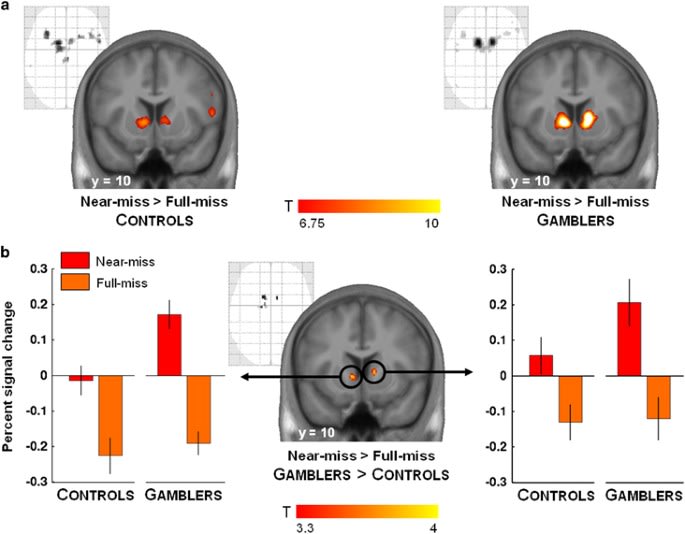
This is why traders often become more engaged with stocks that frequently approach but fail to reach breakout levels. Your brain interprets these near-misses as “almost wins” rather than actual losses, keeping you hooked even when you’re consistently losing money.
The Loss Paradox: Why Losing Makes Some People Risk More
Loss aversion research reveals that people feel losses about twice as intensely as equivalent gains. But here’s the paradox: when people are already losing, they often become more risk-seeking, not less. It’s like being down at the poker table and starting to make bigger, more desperate bets to try to get even.
This explains the dangerous attraction to “oversold” or “beaten down” stocks. When you’re already losing money, your brain’s reward system actually increases dopamine release during losses, trying to motivate you to recover. This can create a destructive cycle where losing money makes you want to risk even more.
Share
Two Types of Trading Psychology
Understanding this brain science reveals why there are essentially two types of trading approaches, each with different psychological demands:

Wow! Wowee! Wowza!
**Momentum Trading: Surfing the Waves **This means buying stocks that are already moving up and riding the trend. It’s like surfing—you’re working with the wave’s natural direction rather than fighting against it. This approach aligns with your brain’s natural reward prediction system because you’re following confirmed patterns rather than betting against them.
And I’m not advocating meme stocks here or risky bets. There’s a way to combine momentum with stability to get more predictable results.

I guess you can what my bias is… but don’t worry, there are plenty of issues with momentum trading as well!
Mean Reversion: Swimming Against the Current This means buying stocks that have fallen sharply, betting they’ll bounce back to their average price. It’s like trying to surf against the wave possible, but much harder and requiring more skill and psychological discipline. This approach fights against your brain’s natural tendencies.
And what if there is no wave… choppy volatility and low or negative returns…
Let’s just say it has that “lack of control” I hated about slot machines.
And yes, this is describing the popular “buy and hold” and “buy the dip” approaches.
It’s not that those are never a good idea. It’s just not a good idea without reason or for the wrong reasons.
The Intermittent Reinforcement Trap
The most dangerous pattern in trading psychology is what researchers call “intermittent reinforcement.” Imagine a slot machine that paid out randomly—sometimes after 3 pulls, sometimes after 50, sometimes after 200.
If we were rationale, we’d say, “Hell, no!” But believe it or not, this kind of unpredictability makes it nearly impossible to stop playing.
I’m pretty sure that kind of thing happens with dating, too!
Many trading strategies accidentally create this same pattern:
Occasional big wins mixed with frequent small losses
Random timing of profitable trades
Unpredictable market conditions that sometimes reward bad behavior
This pattern is psychologically toxic because it creates hope without consistency, leading to persistent losing behavior that occasionally gets rewarded just enough to continue.
It’s not unlike an abusive relationship…
But I’ll tell you this: you deserve more.
Why This Matters for Your Trading
Understanding these psychological mechanisms isn’t about becoming a robot—it’s about working with your brain instead of against it. In the next parts of this series, we’ll explore:
How to design trading systems that channel your psychology productively
Why momentum and mean reversion strategies require completely different mental approaches
Practical tools and technologies that can protect you from your own impulses
Evidence-based techniques that have helped thousands of traders develop discipline
The goal isn’t to eliminate emotions from trading—that’s impossible. The goal is to understand how your brain works so you can create systems that help you make better decisions even when emotions are running high.
In Part 2, we’ll dive deep into the specific differences between momentum and mean reversion trading psychology, and why one approach might be dramatically easier for your brain to handle than the other.
Subscribe now
Share